




Appointments
Request Appointment/Request Exam - After completing the respective forms, these requests will be processed by our services, and you will receive confirmation by email. The indications about the Agreements (Insurance/Subsystem) are merely informative, please request confirmation in the "Observations" field.
Schedule Appointment/Exam myHPA - By accessing myHPA Saúde you can make the appointment in real time, directly on the Doctor's schedule according to his availability.
You can also contact us at +351 282 420 400 Algarve | +351 269 630 370 Alentejo | +351 291 003 300 Madeira
Phone booking/service hours:
Monday to Friday: 8:00 AM to 7:00 PM, Saturday: 8:00 AM to 5:00 PM Sunday and Holidays: Closed
(National landline)
Your request has been successfully received. We will confirm your appointment shortly.
Download myHPA Saúde:


Gastro-oesophageal Reflux Disease (GERD)
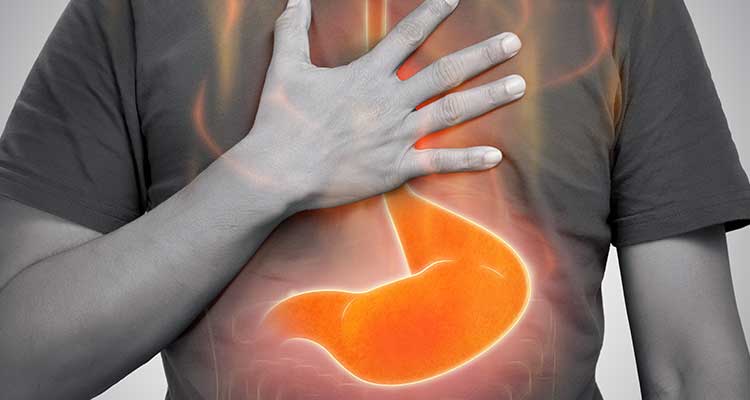
Gastro-oesophageal reflux disease is a digestive disorder that occurs when acidic stomach contents reflux into the oesophagus, causing symptoms such as heartburn, a sensation of fullness and frequent belching. Frequently associated with obesity and smoking, it affects approximately 15–20% of the population. The main cause is dysfunction of the lower oesophageal sphincter, the valve that prevents gastric contents from flowing back into the oesophagus, and it may be exacerbated by factors such as increased intra-abdominal pressure, poor dietary habits, smoking and pregnancy.
Main symptoms:
- Heartburn and pain or burning sensation in the oesophagus;
- Sensation of fullness and frequent belching;
- Hoarseness, dry cough and laryngitis;
- Halitosis and dental erosion.
Diagnosis is made through clinical assessment, oesophageal function tests and endoscopy, which allow identification of inflammation caused by acid reflux. Treatment includes medication (such as proton pump inhibitors and antacids), lifestyle and dietary changes, and, in selected cases, endoscopic sphincter-tightening techniques (ARMA, endoscopic fundoplication) or surgery. Lifestyle modification, weight loss and dietary care are essential to control the disease and prevent complications, including the risk of oesophageal cancer.
- Dra. Ana Margarida Vieira
- Dr. André Sancho Ramos
- Dr. Bruno Peixe
- Dra. Helena Tavares de Sousa
- Dra. Maria Margarida Sampaio
- Dra. Patrícia Queirós
- Dra. Ana Rita Herculano
- Dr. André Sancho Ramos
- Dr. Diamantino Sousa
- Dr. Francisco Açucena
- Dr. Horácio Guerreiro
- Dr. Mário César
- Dr. Horácio Guerreiro
CUF Alvor Hospital
CUF Faro Hospital
Hospital São Camilo - Portimão
CUF S. Brás de Alportel Clinic
| Find all the information regarding Specialities and Consultations at CUF Healthcare Units in Greater Lisbon, the North, Centre, and the Azores here. |